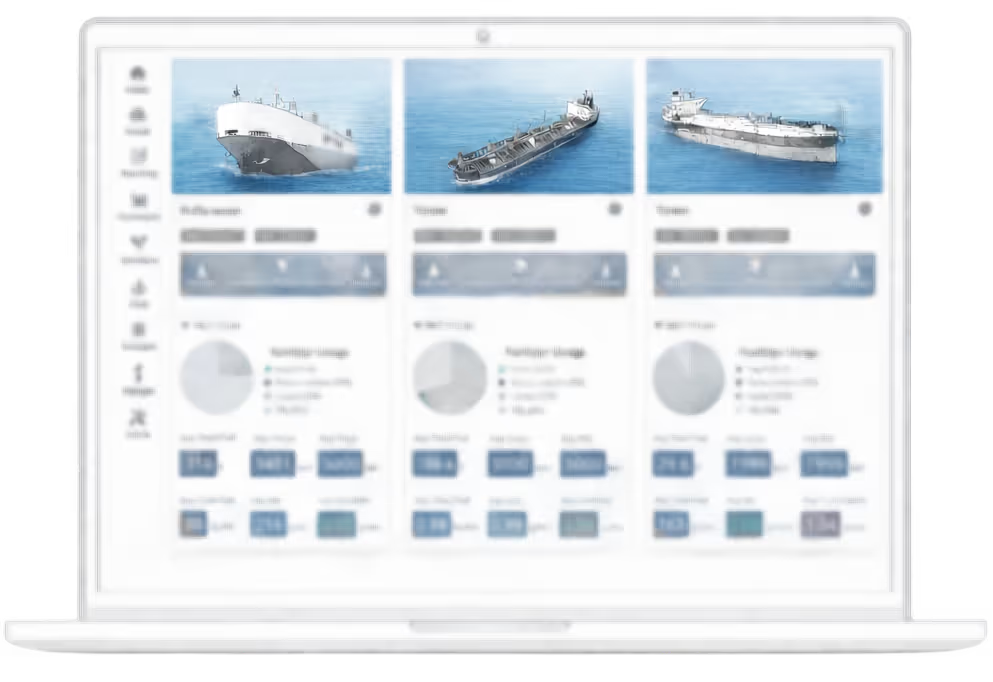
Vessel data is not in short supply. What most operators lack is a single, consistent picture of how their fleet is actually performing.
Fleet Analytics is the platform Manta Marine Technologies built to close that gap. It starts with high-frequency vessel data that is collected, cleaned, unified and structured before anyone ashore ever sees it. From there, it gives operators and fleet managers the possibility to analyse performance, identify patterns and meet regulatory reporting requirements. All in one place.
Fleet Analytics does not save fuel. What it does is give you a complete, evidence-based picture of how your fleet is actually performing, so you know exactly where to focus your efforts.
How Data Gets Into Fleet Analytics
Fleet Analytics receives high-quality data through two routes, depending on what is installed on the vessel.
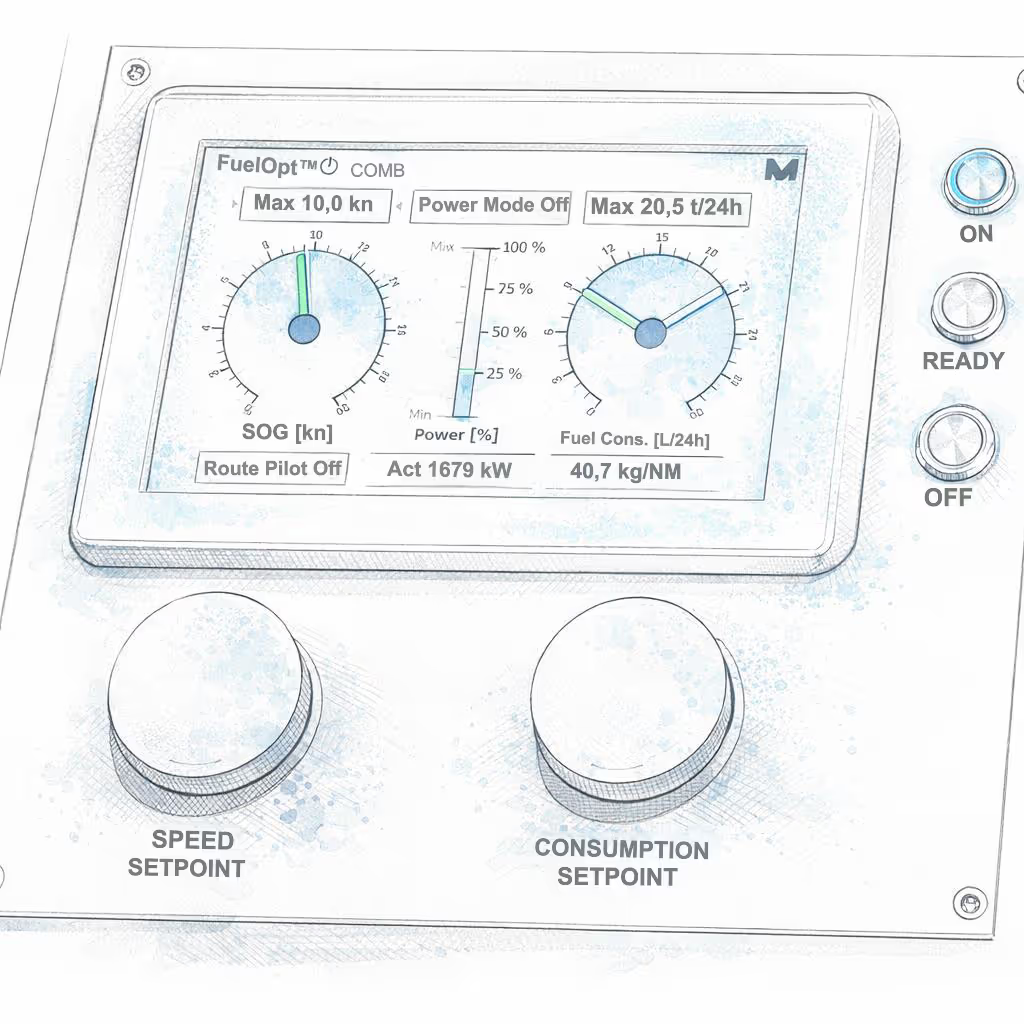
The first is FuelOpt, Manta's precision execution system. FuelOpt is already collecting high-frequency propulsion data as part of its core function, and that data feeds directly into Fleet Analytics. For vessels equipped with FuelOpt, the data pipeline is already in place.
For operators who want their fleet in Fleet Analytics but do not yet have FuelOpt, there is ShipSense: a standalone hardware unit that can be installed on any vessel to collect operational data independently of the propulsion control system. The data quality is the same.
Live Data Collection: What It Means in Practice
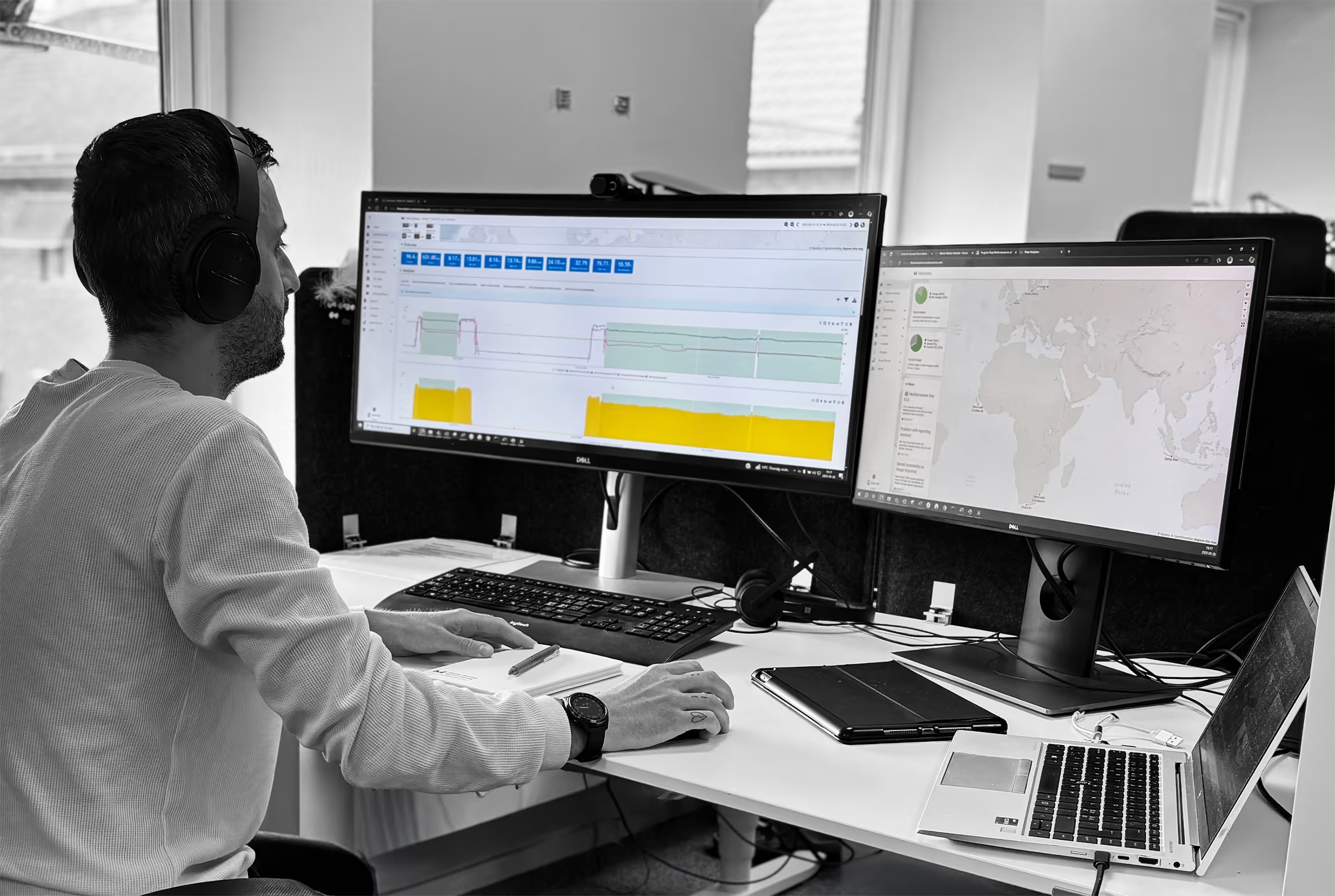
Instead of waiting for a noon report or an end-of-voyage summary, fleet managers and superintendents can follow their vessels while they are at sea. Fleet Analytics displays current speed, fuel consumption, shaft power and other key parameters in near real-time.
For operators managing multiple vessels across different trades and routes, this changes how decisions are made. A vessel that is overconsuming mid-voyage can be identified while there is still time to adjusted instructions. The team ashore can see what is happening and act on it during the voyage, not after.
Post-Voyage Analysis: Turning Data Into Decisions
Once a voyage is complete, all collected data is available for analysis within the platform. Operators can filter by vessel, route, time period or specific parameters. They can compare performance across a full year of voyages, across seasons, loading conditions or operational profiles. They can also zoom into a single passage and examine what happened at a specific point in the voyage.
This kind of structured retrospective is what turns a data platform into an operational tool. Not just a record of what happened, but a basis for deciding what to do next.
Patterns, Performance and the Questions Worth Asking
Fleet Analytics allows operators to compare a vessel against its own historical performance, against other vessels in the fleet, and against sister vessels running similar routes and cargo profiles. Over time, patterns emerge from that comparison that would be invisible without consistent, structured data.
Consider a vessel sailing the same route, with the same cargo type, under similar conditions, that suddenly requires more fuel than it did six months ago. That is a signal. Fleet Analytics makes that signal visible. What it does not do automatically is tell you the cause. That requires experience and judgment.
The same logic applies in the other direction. A vessel that has just had its hull cleaned and is suddenly performing better than before will show that improvement clearly in the data. The connection between the maintenance action and the performance outcome becomes visible and quantifiable.
This is where Fleet Analytics becomes commercially relevant. It is the difference between managing a fleet on averages and managing it on evidence.
The Fleet Performance Team: From Data to Operational Decisions
Operators who have the maritime experience to interpret this data can conduct this analysis independently. Fleet Analytics offers customisable dashboards and graphs that make it possible to explore the data on your own terms.
For added assistance, Manta offers advisory support through the Fleet Performance Team; whether it’s a second pair of eyes, pressure testing conclusions or recommendations of operational measures to improve the fleet’s efficiency.
The team includes experienced mariners with significant sea time, including former captains, who bring practical understanding of what happens on the bridge to the data analysis. They do not just read numbers. They understand the conditions behind them: what a storm looks like in shaft power data, how a loaded passage differs from a ballast leg, what normal degradation looks like versus something that warrants action.
For more on how precision data drives performance improvements in practice, the Precision Execution article covers the relationship between accurate execution and meaningful results in detail.
Emissions Reporting: Compliance Without the Administrative Burden
Regulatory reporting is one of the most time-consuming parts of fleet management, and the complexity is increasing. Fleet Analytics includes a reporting function built specifically to handle IMO DCS, EU MRV and EU ETS requirements. The platform also integrates directly with DNV Veracity, which means reported data can be uploaded automatically and on schedule without any manual export or reformatting. For a detailed look at how the reporting feature works, including the timeline interface and fuel tracking logic, see the dedicated article: Maritime Vessel Reporting Software: How Fleet Analytics Simplifies Compliance and Reduces Administrative Burden.
The short version is that Fleet Analytics handles the output formatting for each regulatory standard automatically. The crew log data once through a simple interface and the platform takes care of the rest. As regulations evolve, the platform updates to match, without changing the workflow for the people using it.
Fleet Analytics and FuelOpt Together: Closing the Loop on Every Voyage
Used independently, Fleet Analytics and FuelOpt each deliver clear value. Used together, they cover two of the three critical elements of every voyage.
FuelOpt handles execution. It controls the vessel's propulsion output to maintain the setpoints defined in the voyage plan, achieving close to 100% accuracy depending on the mode in use. The crew set the parameters and FuelOpt makes sure they are maintained, throughout the voyage, regardless of changing conditions.
Fleet Analytics gives you the possibility to analyse. Every voyage executed with FuelOpt generates a detailed data record that flows directly into the platform. That record becomes the basis for post-voyage review: what was planned, what was executed, what the data shows about performance, and what can be improved for the next voyage.
Together, they form a tightly connected operational loop. The voyage plan is carried out precisely. The results are captured fully. And the findings from each voyage feed into better decisions for the next one.
As execution becomes more precise and post voyage insights more reliable, planning can move from estimation towards prediction. This is the next step Manta Marine Technologies is actively working on.
A third tool is currently in development to support the complete voyage cycle. Details will be shared later this year. In the meantime, operators looking to strengthen execution and post voyage analysis already have the tools they need in place.
Who Should Be Looking at Fleet Analytics?
- Fleet managers who are currently relying on noon reports or manual summaries and want a structured, evidence-based picture of how their fleet is actually performing.
- Technical superintendents who want to benchmark vessels against themselves over time, against the fleet, or against sister vessels, and identify when a pattern in the data warrants a maintenance decision or an operational change.
- Commercial operators with CII, EU ETS or IMO DCS reporting obligations who want to reduce the administrative time that compliance currently requires. Any operator already using FuelOpt who wants to make full use of the data their vessels are already generating.
Fleet Analytics is available as a standalone platform with ShipSense as the data source, or as a natural extension of FuelOpt for operators who already have the execution layer in place.
Ready to bring operational clarity to your fleet?
Contact us!

Oliwia Gałecka
Oliwia holds a degree in Naval Architecture and Marine Engineering and has experience working with shipowners, regulatory bodies, and commercial environments across the marine industry. She joined Manta Marine Technologies in January 2026, where she works as a Fleet Performance Analyst.