Protect Your Scrubber Investment Through Smart Dry Dock Maintenance
The global shipping industry faces relentless pressure to meet IMO emission standards while maintaining operational efficiency. For shipowners and operators, choosing the right sulphur compliance strategy is a critical business decision that impacts fuel costs, operational flexibility, and long-term competitiveness.
For those who've invested in Exhaust Gas Cleaning Systems (EGCS) - commonly known as scrubbers - the value proposition depends entirely on one factor: system reliability. Installing a scrubber is just the beginning. Without proper maintenance, that six or seven-figure investment becomes a liability rather than an asset, potentially forcing an expensive switch to Low Sulphur Fuel and eliminating the cost advantages that justified the original investment.
This is because the economic value of a scrubber is directly linked to fuel price spreads. In periods where the spread between HSFO (High Sulfur Fuel Oil) and compliant fuels is significant; a functioning scrubber enables immediate and substantial cost savings. However, these savings are highly sensitive to performance - if the system underperforms or becomes unavailable, the benefit disappears instantly.
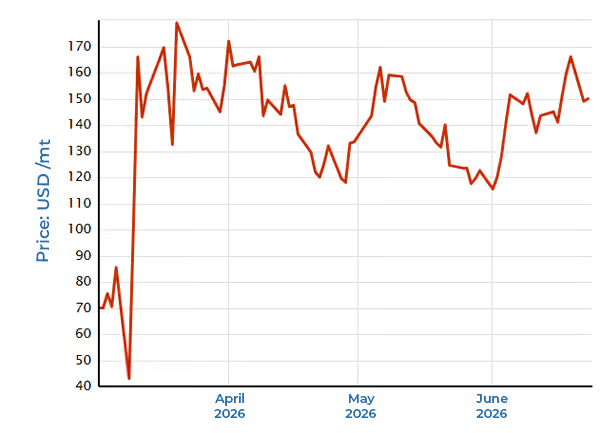
In SOx Emission Control Areas, where stricter sulphur limits apply, vessels without scrubbers must use ultra-low sulphur fuels such as Marine Gas Oil (MGO). This makes the effective spread between HSFO, such as IFO380 and MGO particularly relevant, as it represents the true cost difference between operating with or without a scrubber.
In short: reliability is not just a technical requirement - it is what protects your fuel strategy, your compliance, and your earnings.
More broadly, the fuel market is defined by several key spreads-including HSFO, VLSFO (Very Low Sulfur Fuel Oil), and MGO-each reflecting the cost of compliance and refining. For scrubber-equipped vessels, the HSFO-VLSFO spread is particularly important, as it defines the economic advantage of operating with an EGCS.
The Commercial Case: Invest a Little, Save a Lot
By investing strategically in scrubber maintenance during scheduled dry docking, you protect your ability to run on cheaper HSFO, stay compliant with SOx emission limits, and avoid the detention risks and fines that come with non-compliant systems.
Put simply: a modest maintenance investment during dry dock keeps your system running reliably, your fuel costs low, and your vessels earning. Emergency repairs at sea? That's where the real money gets lost.
Why Dry Dock is Your Critical Maintenance Window
Dry docking isn't just a maintenance formality - it's your opportunity to restore your scrubber system to like-new condition and prevent the unplanned disruptions that kill schedules and profitability. Some maintenance work can only be done properly when the scrubber is offline for several days, making dry dock the ideal intervention point.
The benefits are clear:
Stay Compliant: Ensure SOx limits are met and avoid costly port state control detentions
Boost Reliability: Minimise mid-voyage failures and extend component lifespan across all system elements
Prevent Corrosion: Address washwater-related damage before it spreads throughout piping and valves.¹
Save Costs – Planning maintenance to be executed during dry dock is always more efficient and cost-effective than emergency repairs at sea
¹MMT scrubbers are built using high-grade materials selected to withstand harsh marine operating conditions and acidic scrubber washwater. To date, we have not experienced corrosion in any of the scrubber towers we have delivered. At the same time, we bring extensive experience in assessing and mitigating corrosion issues on third-party scrubbers, including repairs and upgrades where washwater-related damages has occurred.
Five Critical Problem Areas We See Again and Again
After performing numerous dry dock projects on our previously delivered scrubber systems, our service teams have identified recurring issues that, if ignored, lead to serious system failures. Here are the most common problem areas and how we fix them.
1. Overboard Drain Valves: Fighting Erosion and Corrosion
Continuous exposure to low-pH washwater and aggressive flow creates severe erosion and corrosion of valve flaps and bodies. The result? Leakage, loss of sealing integrity, and eventually complete flap damage requiring full overhaul.
These valves are large and difficult for crews to service during normal operations. Overhauling them in dry dock ensures the entire drain system remains sealed, functional, and corrosion-free for the next operational cycle.
2. Automation & Electrical Systems: Battling Heat and Aging
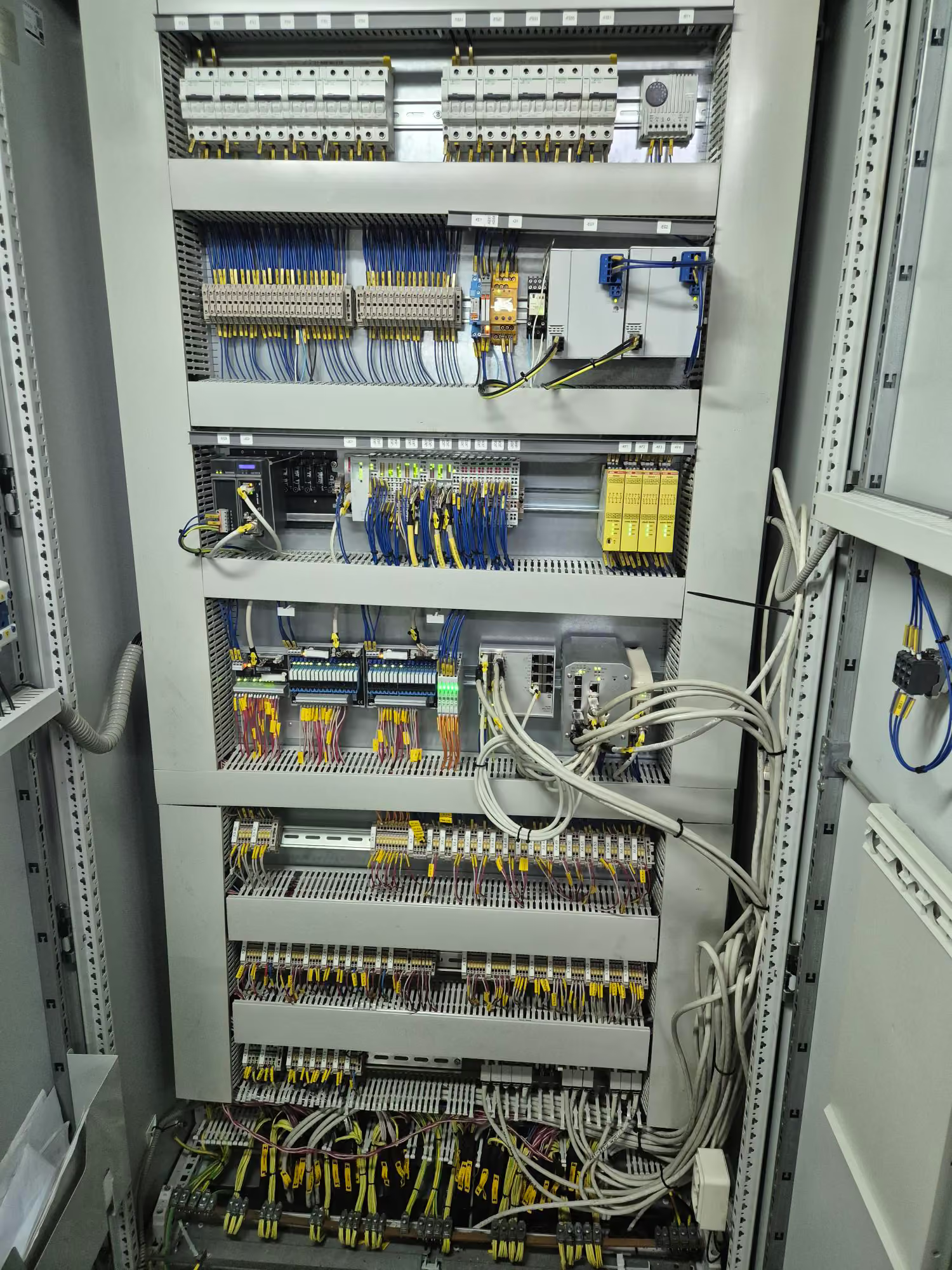
Over time, automation cabinets and VFD fans accumulate dust while facing excessive heat and humidity. These factors degrade electrical components and dramatically shorten their lifespan, risking complete system trips when VFDs fail.
Routine cabinet overhauls and VFD fan replacements during dry dock eliminate overheating risks and improve long-term system stability. It's preventive work that pays dividends in uptime.
3. CEMS (Continuous Emission Monitoring System): Your Compliance Lifeline
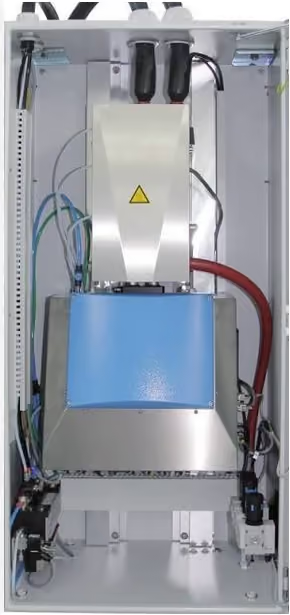
Manta's CEMS upgrade packages include system relocation to better environments, installation of dedicated ventilation or AC units, and enhanced instrument air pre-filtration. The outcome? Accurate readings and 24/7 reliability.
Dust and heat buildup in CEMS cabinets can significantly reduce component lifespan and risk unplanned system failures.
The CEMS is essential for emissions compliance - it's your auditable proof that you're meeting regulatory requirements. Yet poor installation environments often cause recurring failures that compromise data integrity.
Units are sometimes installed in high-temperature or unventilated areas (engine rooms being a common culprit), causing electronic breakdowns and sensor drift.
4. WMU (Water Monitoring Unit): Ensuring Sample Accuracy
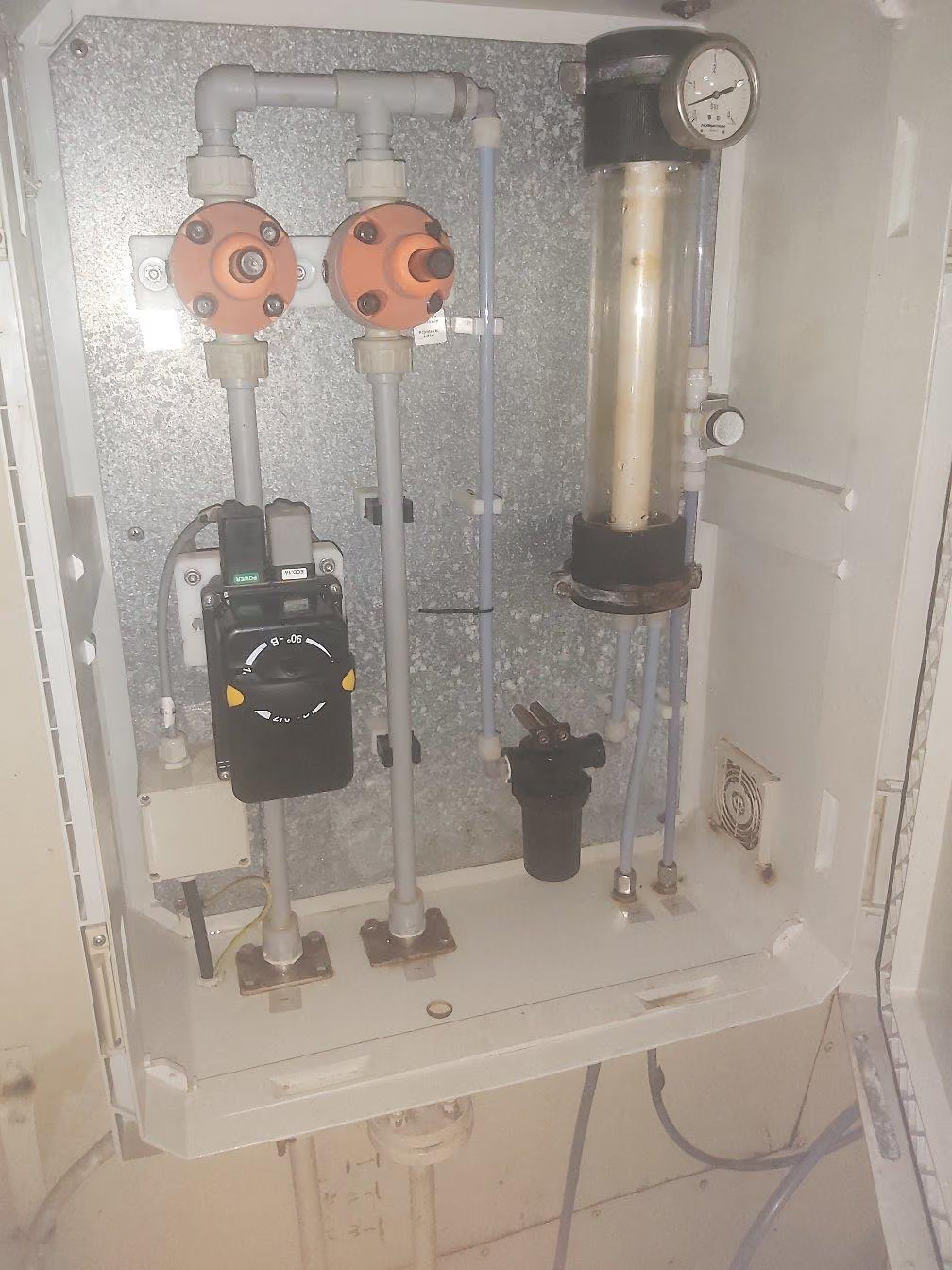
Improper installation or material fatigue in WMU systems leads to inaccurate water sample readings- a compliance risk you can't afford. Air leaks, cracked tubing, and worn fittings caused by vibration and chemical exposure result in sampling errors that undermine your documentation.
Manta's WMU renewal solution addresses this comprehensively: replacement of all plastic fittings, pump upgrades for consistent sampling flow, and sensor recalibration for precision monitoring that you can trust.
5. Dampers & Compensators: Maintaining Sealing and Structural Integrity
Continuous exposure to heat, vibration, and pressure causes dampers to lose alignment and sealing over time. Misaligned dampers lead to gas leakage, poor exhaust routing, and efficiency losses that directly impact system performance.
These components require precision alignment and resealing in coordination with the shipyard during dry dock - work that simply can't be done properly while underway.
Similarly, large compensators connected to the scrubber system are often found damaged, over-compressed, or elongated, resulting in structural fatigue, heavy leakage, and reduced mechanical flexibility. Replacing and correctly aligning compensators during dry dock ensures mechanical integrity and long-term system durability against thermal cycling and vibration.
Comprehensive Dry Dock Service Scope
At Manta Marine Technologies, we deliver end-to-end scrubber lifecycle support - from inspection to overhaul - ensuring your EGCS operates safely, efficiently, and compliantly.
Our service scope covers:
• Mechanical Overhauls: Pumps, valves, NRVs, strainers, and dampers
• Tower Care: Shell internal surface non-destructive cleaning, measurement, evaluation and repair, lance repair and replacement, nozzle replacement, demister maintenance
• Automation & Electrical: Software upgrades, VFD and CEMS servicing, cabinet cooling upgrades, and loop testing
• Overboard Piping: Welding, renewal, and corrosion mitigation strategies
• Safety Systems: Alarm verification and control interlock testing
• Major Component Repairs: Compensators, spool pipes, and heavy-duty fittings
• Critical Spares: Pre-planned supply for seamless dock execution
Two Service Models for Your Operational Reality
Full Package Docking Scope: The Pre-Inspection Advantage
Your scrubber system is a complex combination of mechanical, electrical, and automation components exposed to harsh operating conditions - acidic wash water, vibration, and high exhaust temperatures. Over time, these factors silently degrade system performance. That's why pre-dry docking inspection is the crucial first step before entering the yard.
Pre-inspection identifies:
• Hidden wear and corrosion you can't see during operations
• System performance degradation and compliance status gaps
• Critical maintenance priorities that need immediate attention
• Proper planning and procurement timelines to avoid delays
• Cost-saving opportunities and realistic yard work schedules
We conduct these inspections three to five months prior to dry dock for optimal preparation. This timeline ensures you enter the yard with a complete, data-driven maintenance plan—no surprises, no scrambling for parts, no extended downtime.
The full package includes pre-docking inspections, detailed technical analysis, comprehensive scope and spares planning, and expert on-site execution by our service teams.
Tailor-Made Standardised Dry Dock Kits: Ready When You Need Them
For vessels where pre-inspection isn't possible due to scheduling constraints, we provide standardised service kits covering damper seals, valves, VFD and pump repair kits, CEMS components, WMU spares, and other essential consumables.
These kits are based on years of field experience and operational data, guaranteeing readiness for essential service work without the guesswork. Your shipyard team has what they need, when they need it.
The Bottom Line: Protect Your HSFO Advantage
EGCS investment enables sustained competitive advantage through lower fuel costs, but only when it's maintained properly.
A modest investment in scheduled dry dock maintenance protects that advantage, ensures regulatory compliance, and prevents the costly detentions and emergency repairs that destroy operational budgets. The choice is clear: proactive maintenance during planned dry dock periods.
Ready to optimise your next dry dock period?
Contact our technical service team at service@mantamarine.com to schedule your pre-dry-docking inspection, coordinate spare parts planning, or arrange full dry dock service execution.
You can also reach out directly to our Service & Commissioning Manager Amir Bakshian, and our Commercial Manager, Surender Singh for guidance.
Keep your fleet sailing clean, compliant, and efficient - with the commercial advantages that proper scrubber maintenance delivers.

David Gundén
David brings a strong technical background in internal combustion engine development from the automotive industry and experience as an IC engine application PM in the marine sector. Since joining Manta Marine Technologies in 2014, David has worked as a PM for SOx Scrubber projects, developed and led a team for complex technical investigations, and managed the team responsible for developing and delivering emission abatement and conversion projects within Manta Lifecycle Services. As of August 2025 he holds the position of Head of Lifecycle Services and has the overall responsibility for our spare parts, technical services, as well as vessel conversions and upgrades.